Tankless vs. Tank Water Heater: Which Is Right for You?
By Glenn, Licensed Master Plumber #5822Last updated
A tank water heater stores hot water and keeps it hot, while a tankless water heater heats water only as it flows through. Tank models cost less to buy and are simpler to replace. Tankless models take up less space, will not run out of hot water, and usually last longer, but they can need upgrades to switch over.
Here is how to decide which one fits your home.
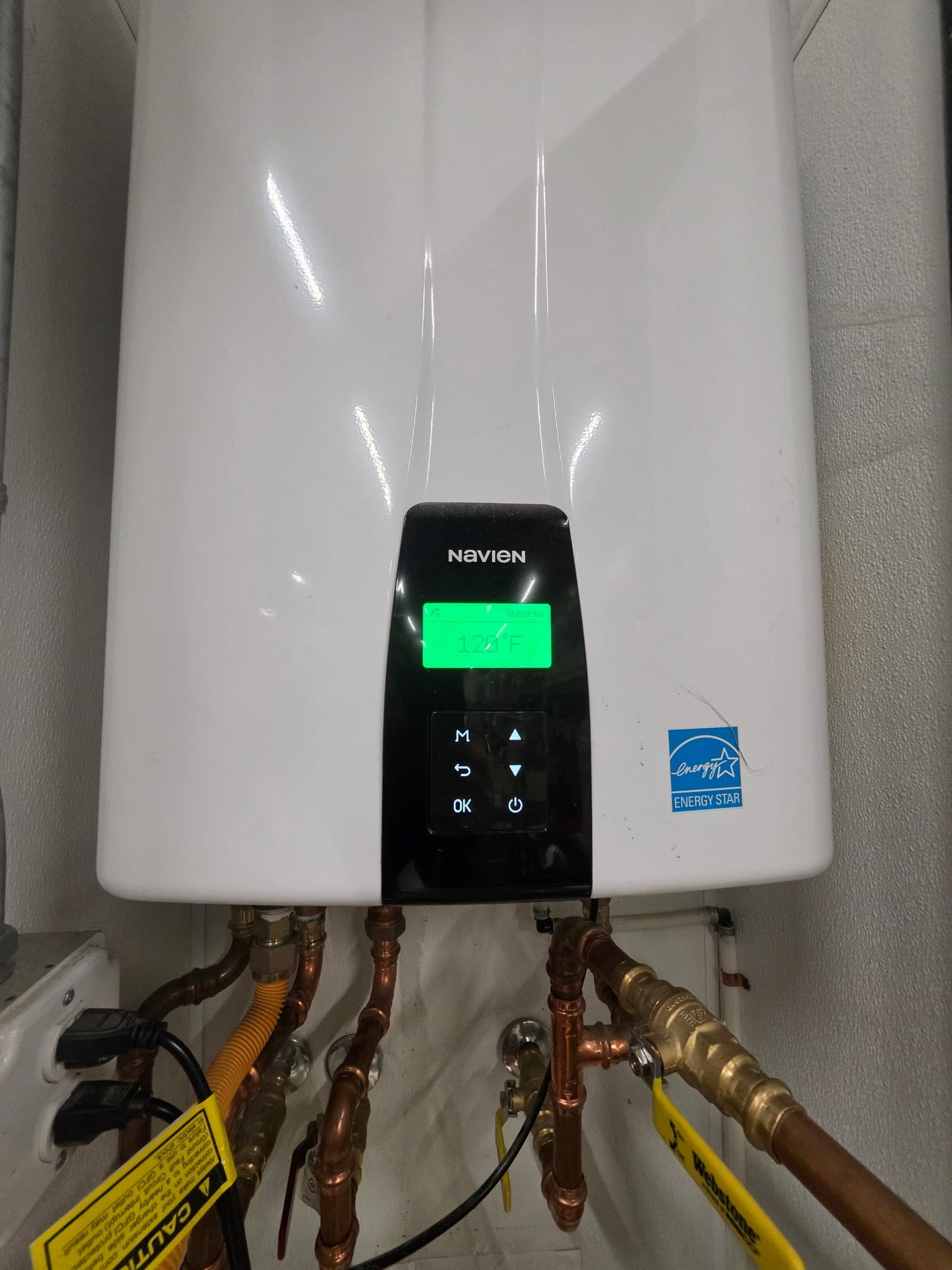
How does a tank water heater work?
A tank water heater holds a set amount of water, commonly 40 or 50 gallons in a home, and keeps it at temperature all day. When you open a hot faucet, hot water leaves the top of the tank and cold water refills the bottom.
Because it keeps water hot even when nobody is using it, a tank loses some heat all day. That is called standby loss. When a busy morning empties the tank, you wait for it to recover.
How does a tankless water heater work?
A tankless water heater, sometimes called on-demand, has no storage. When you open a hot faucet, water flows through a heat exchanger and is heated as it passes. When you close the faucet, it shuts off.
You do not run out of hot water, but there is a limit to how much hot water it can make at once. If the shower, dishwasher, and washing machine all run together, a unit that is too small will struggle. Sizing it right matters.
How do tank and tankless water heaters compare?
| Feature | Tank water heater | Tankless water heater |
|---|---|---|
| How it heats | Stores and keeps water hot | Heats water as it flows |
| Hot water supply | Limited to the tank size, then recovers | Continuous, limited by flow rate |
| Up-front cost | Lower | Higher, especially when switching over |
| Energy use | Some heat lost while idle | No standby loss |
| Space | Large footprint | Wall-mounted and compact |
| Typical life | Often around 8 to 12 years | Usually longer with maintenance |
| Maintenance | Occasional flushing | Periodic flushing or descaling, especially with hard water |
| Replacing like for like | Usually simple | Usually simple once the setup is in place |
What does it take to switch from tank to tankless?
This is where most of the work is. A gas tankless unit often needs a larger gas line than a tank heater and its own type of venting. An electric tankless unit can need much more electrical capacity than a tank. The water connections and mounting location change too.
None of that is a reason not to switch. It just means you should get a real look at your setup before deciding. We will tell you what would need to change, so there are no surprises.
When does a tank water heater make more sense?
A tank is often the better choice when your current tank just failed and you need hot water back quickly, when you want the lowest up-front cost, or when your gas line or electrical service would need big upgrades for tankless. A new tank in the same spot as the old one is the simplest replacement there is.
When does tankless make more sense?
Tankless is often a good fit when you are tired of running out of hot water, when space is tight, when you plan to stay in the home long enough to benefit from the longer life, or when you are already remodeling. Businesses with steady hot water demand can benefit too.
Gas or electric?
Most homes stay with what they already have, because switching fuel means new gas lines, venting, or electrical circuits. Gas units usually recover faster or deliver more hot water at once. Electric units are simpler where there is no gas service.
Can you repair the water heater I have now?
Often, yes. A bad thermostat, a burned-out element, a pilot that will not stay lit, or a tankless error code can usually be repaired. A leaking tank cannot. We repair and replace tank and tankless water heaters, gas and electric, and we will tell you honestly which way we would go.
Need Help With This?
Need water heater repair and replacement in Fort Smith? Glenn is a licensed master plumber serving the River Valley. Call or text (479) 719-1263.